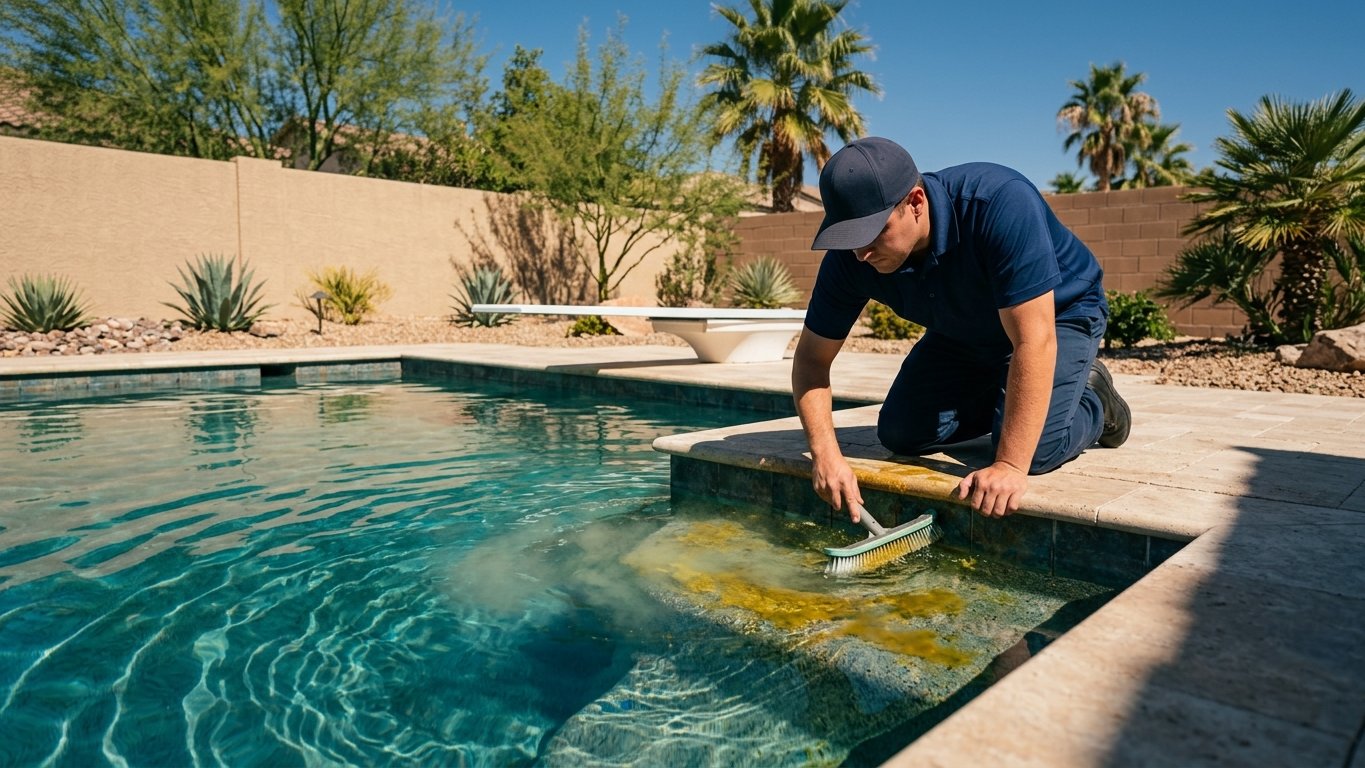
Algae is what moves in the moment your pool’s defenses drop, and in Las Vegas those defenses drop fast. Intense sun burns off chlorine, monsoon dust storms blow in the nutrients algae feeds on, and the heat accelerates everything — so a clear pool can develop a bloom in just a few days. Clearing it is rarely as simple as dumping in chlorine, because the type of algae and the reason it appeared both matter. Algae treatment is a core part of our ongoing pool maintenance in Las Vegas, where steady chemistry is what keeps blooms from starting in the first place.
Knowing which algae you are fighting
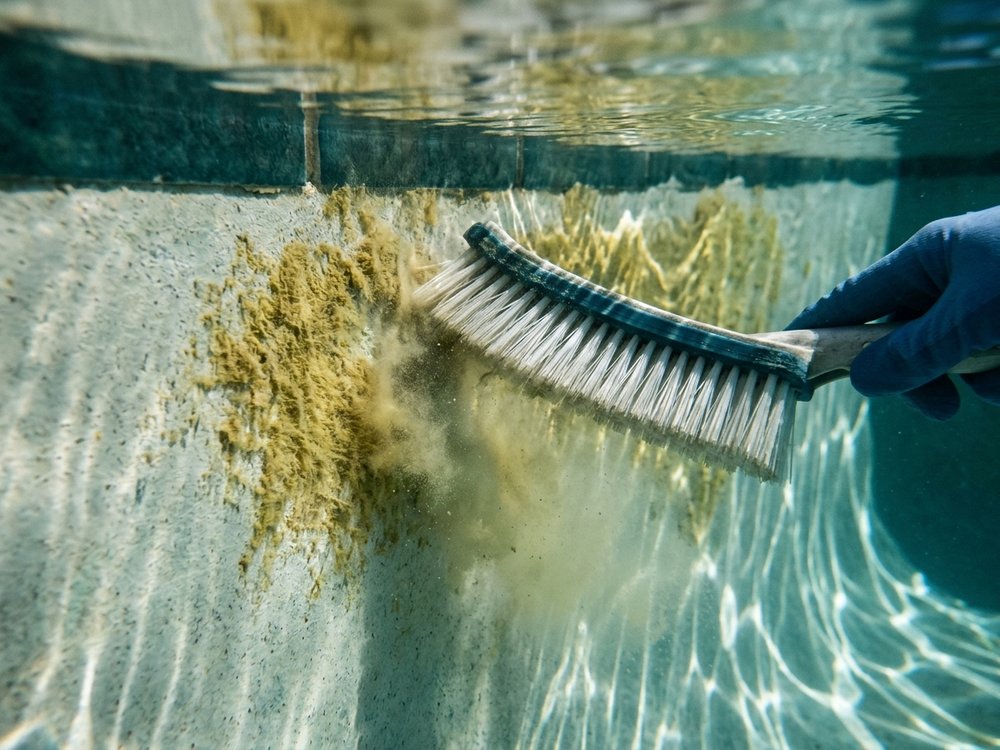
The right treatment starts with correctly identifying the algae, because the three common types are not equally stubborn. Green algae is the familiar one — it clouds the water green and clears relatively easily once you shock and filter. Mustard algae, sometimes called yellow algae, shows up as dusty patches that cling to shaded walls and the floor, brushes away in a cloud, and then returns; it shrugs off normal chlorine levels and needs a harder push. Black algae is the worst of the three: it roots into plaster and grout and grows a tough protective layer that ordinary chlorine cannot penetrate. We identify what is actually present before treating, because hitting mustard or black algae with a green-algae approach just wastes effort and lets it rebound.
Why the desert breeds blooms
Las Vegas is close to an ideal environment for algae when a pool slips out of balance. The UV here is punishing, stripping chlorine out of the water faster than almost anywhere, so sanitizer that would last days in a mild climate can bottom out quickly under the desert sun. At the same time, monsoon season dust storms blow phosphates and organic debris straight into open pools, delivering the exact nutrients algae needs to bloom. Add high water temperatures that speed up biological growth, and you have a recipe where a brief dip in chlorine turns into a visible bloom almost overnight. Understanding these drivers is what lets us not just clear the algae but keep it from immediately coming back.
How we clear an active bloom
Treatment follows a sequence built around the algae type. First we test and balance the water so the chlorine can actually work — shocking a pool with poor chemistry is far less effective. Then we brush aggressively, because brushing breaks up the algae and, with black or mustard algae, strips away the protective layer so sanitizer can reach the cells. Next we shock the pool, scaling the dose to how resistant the algae is, and we run the equipment hard to circulate treated water everywhere. As the algae dies the water clouds, and the filter has to clear that debris, so we clean or backwash it as it loads. For stubborn mustard and black algae we may treat repeatedly and target the specific surfaces where it hides until it is genuinely gone, not just faded.
Controlling phosphates and the food supply
For a pool that blooms again and again, clearing the current algae is only half the job — we look at what keeps feeding it. Phosphates are the main nutrient, and in the desert they arrive constantly through dust, fill water, and yard debris. While a well-chlorinated pool will not bloom on phosphates alone, high nutrient levels mean that any dip in sanitizer turns into a fast, ugly bloom. Where repeated algae is the pattern, we factor phosphate levels and circulation into the plan so the underlying conditions are addressed, not just the visible green. It is the difference between fighting the same bloom every month and actually getting ahead of it.
Keeping algae from returning
Once the pool is clear, staying clear comes down to consistency. Algae cannot establish in water that holds steady sanitizer and circulates well, so the real prevention is maintaining chlorine at the levels public-health guidance recommends and keeping the pool turning over — especially through the brutal summer stretch when demand is highest. Brushing regularly denies clingy algae the still, shaded spots it likes to start in. Most people who deal with a serious bloom move onto a steady schedule afterward, because in this climate the lesson is consistent: the water turns the moment sanitizer slips, and reliable chemistry is the only thing that keeps it blue.
Seeing green, yellow, or black spots taking over your pool? Call or text and we’ll identify the algae and clear it out.
SERVICE VERIFY: confirm Las Vegas Pool Cleaner offers this exact service (and any equipment/credential it requires) before launch.