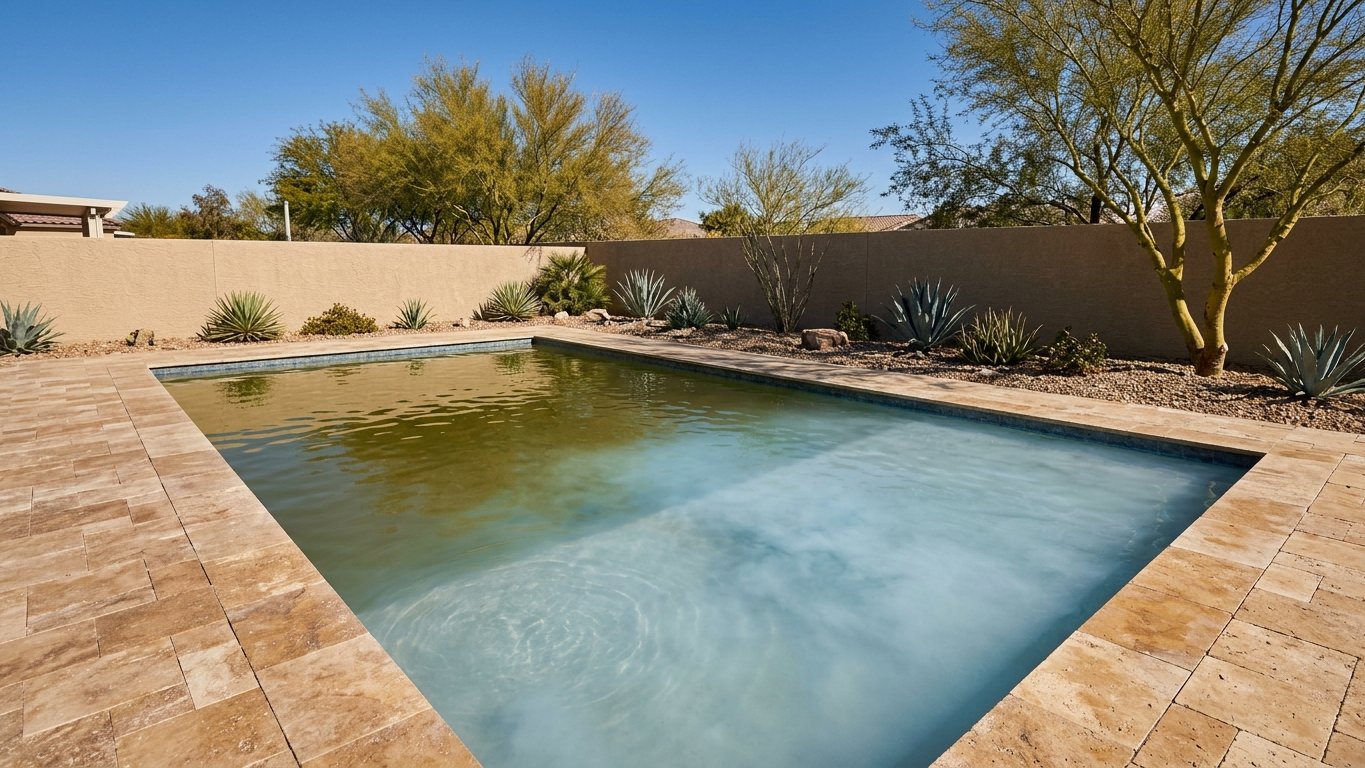
A green pool clears in anywhere from a few days to well over a week, and the deciding factor is how bad the bloom is. A pool that has just turned light green can often be swimmable again within a few days, while a dark, opaque swamp can take a week or more. The reason for the spread is not the chemistry that kills the algae — that part is fast — it is how much dead algae the filter has to remove afterward, and that is the part that takes time.
Light Green Versus a Full Swamp
The single best predictor of your timeline is how far the pool has gone. A light green tint usually means the bloom is recent and the algae count is still relatively low. Killing it and clearing it is a quick job, often a matter of a few days, because there is not much material for the filter to process once the algae is dead.
A dark green or black-green pool is a different story. By the time the water is opaque and you cannot see the bottom, the algae has multiplied enormously, and every bit of it has to be killed and then filtered out. That kind of recovery commonly runs a week or more. A pool that has been neglected long enough to grow dark, slimy, and full of debris sits at the far end of the range, because there is simply far more to undo.
The Filter Is the Real Bottleneck
Here is the part that surprises most owners: killing the algae is the easy step, and it is not what determines how long recovery takes. Once a pool is shocked, the algae dies, but it does not vanish — it turns the water cloudy gray or white and stays suspended until the filter physically removes it. The clearing of a green pool is really a filtration job, and the filter is the bottleneck.
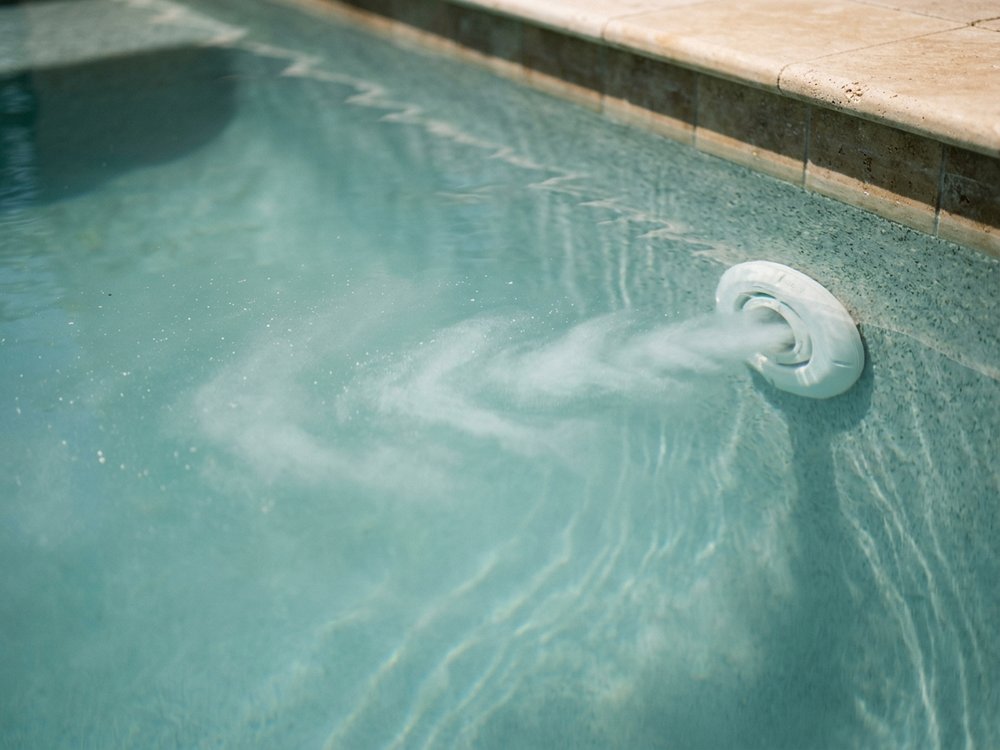
A heavy bloom can produce more dead algae than the filter can clear in a single pass. The equipment has to run hard, around the clock, and the filter has to be cleaned or backwashed repeatedly as it clogs with debris. Each cleaning restores its flow, and gradually, pass after pass, the water transitions from cloudy to hazy to clear. This is why a pool can look almost worse right after it is shocked than it did green — the dead algae is now suspended in the water, waiting for the filter to catch up. Patience during this stage is not optional; the filter can only move so much water per hour.
Why the Pump Has to Be Working
None of the clearing happens without circulation, which makes the pump the gatekeeper of the entire timeline. If the pump is dead, weak, or the filter has failed, shocking the pool just wastes chemical, because there is nothing to move the water through the filter and pull the dead algae out. A green pool with a broken pump cannot clear at all until the equipment is working again.
This is why a proper recovery starts by confirming the equipment can actually circulate and filter before any chemical goes in. If the pump or filter is the underlying reason the chlorine bottomed out in the first place, that has to be addressed as part of the job — otherwise the pool clears and promptly turns green again. The health of the equipment sets the ceiling on how fast and how completely a pool can recover.
Why Draining Is Risky in Las Vegas
When a pool looks hopeless, draining and refilling sounds like the fast shortcut. In the desert, it is usually the wrong move and carries real risk. An empty plaster pool can literally float out of the ground from the pressure of groundwater pushing up beneath an unweighted shell. Exposed plaster can crack in the intense heat once there is no water protecting it. And Southern Nevada regulates where pool water can be discharged, because water here is scarce and managed.
For all those reasons, clearing a pool chemically is the standard approach, not draining it. It protects the shell, saves thousands of gallons in a place where water matters, and usually costs less than a drain-and-refill anyway. Draining is reserved for the rare cases where the water genuinely cannot be saved, or where staining is severe enough that the surface itself needs restoration. For the overwhelming majority of green pools, the water is recovered in place.
What Speeds the Recovery Up
A few things meaningfully shorten the timeline. Strong, healthy circulation is the biggest one — a properly working pump and a clean, well-functioning filter clear water far faster than struggling equipment. Running the equipment continuously rather than on a timer keeps the water moving through the filter as much as possible. Brushing the walls and floor knocks settled algae back into suspension so the filter can grab it instead of leaving it to recolonize. Cleaning or backwashing the filter often, rather than letting it stay clogged, keeps flow rates high throughout the job. For very heavy blooms, a clarifier or flocculant can help fine dead-algae particles clump together so the filter catches them more efficiently.
What does not help is impatience that leads to skipping steps. The water clears when the algae is dead and filtered out, in that order, and rushing past the filtration stage just leaves a cloudy pool. The fastest real recovery is a well-circulated one with the filter doing its job continuously.
What Made It Green Affects the Clock
The path to green also shapes how long the climb back takes. A pool that turned because the chlorine simply ran out over a vacation is often a more straightforward recovery than one that went green because the pump died or the filter failed — in the second case, the equipment problem has to be solved before the water can even begin to clear. A pool fed by an ongoing source of trouble, like a storm that dumped a heavy load of phosphates and organic material, can also fight back harder, because there is more for the chlorine to overcome before the algae stays dead.
This is why a recovery is not just about how green the water looks today, but about why it got there. Two pools at the same shade of green can clear on very different timelines if one has healthy equipment and a simple cause while the other has a failed pump and a yard’s worth of storm debris in the water. Sorting out the cause early is part of giving an accurate timeline, not an afterthought.
Setting Realistic Expectations
The honest answer to “how long” is that it depends on the pool, and a good assessment up front gives you a real timeline instead of an empty promise. A light bloom is a quick fix; a deep swamp is a project measured in days of hard filtration. Either way, the work is finished when the water is balanced and safe, not merely when it stops looking green. If you are staring at a green pool and want a clear, realistic plan to get it back, our green-to-clean pool recovery clears algae-green and swampy pools and rebalances the water so it stays blue.
Call or text us to have your green pool assessed and get an honest timeline for clearing it.
AUTHORITY LINK TODO: add one verified outbound source (see references/authority-domains.md) that supports a specific claim in this article, in-paragraph, then set authorityVerified: true.