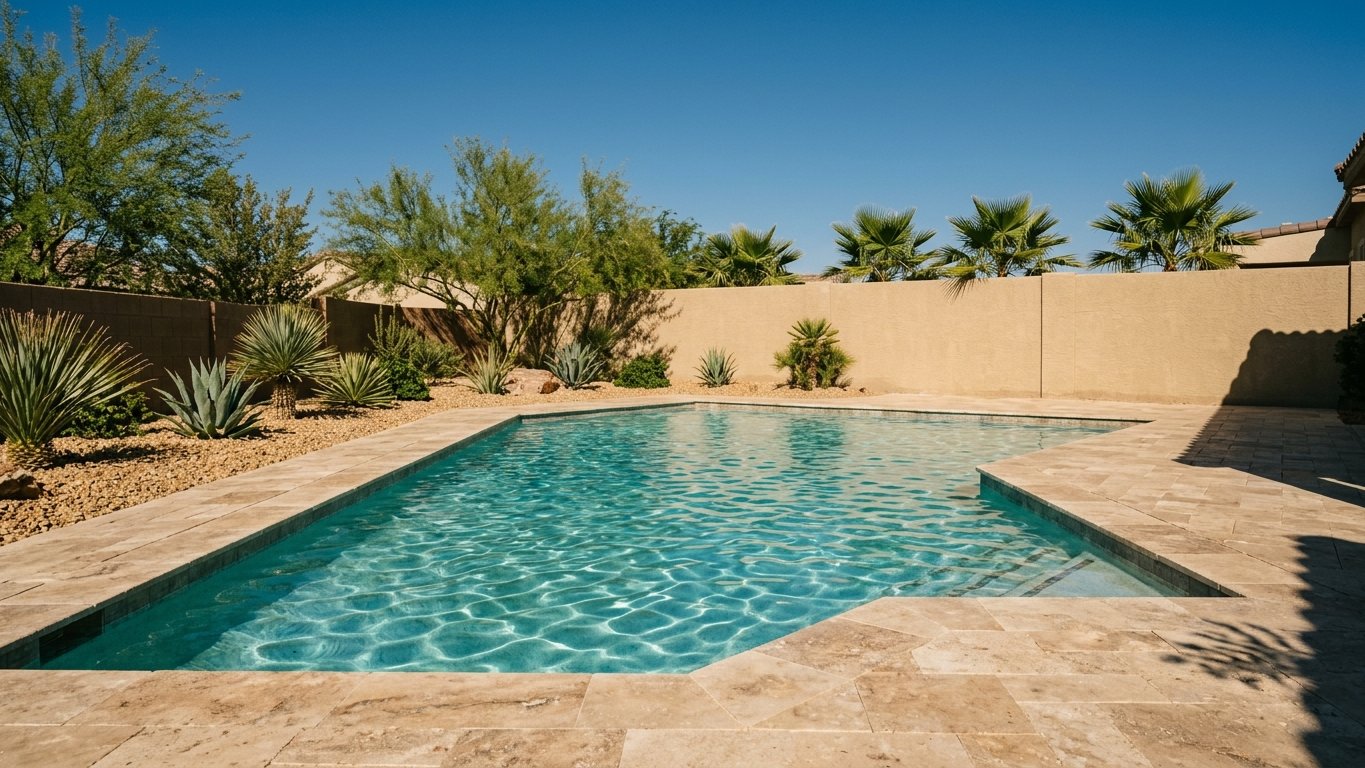
In Las Vegas, a pool should be cleaned and balanced weekly through the summer, because the desert heat and UV strip chlorine and feed algae faster than almost any climate in the country. In the cooler months that cadence can sometimes ease, but the summer answer is firm: weekly. The reason is not fussiness — it is that a desert pool left too long between visits can swing from clear to green in a matter of days once its sanitizer runs out.
Summer Demands Weekly Service
Summer is the season that sets the rule, and it sets it at weekly. Three desert forces stack up at once during the hot months, and each one pushes a pool toward trouble. The intense ultraviolet sun burns chlorine out of the water remarkably fast, so the sanitizer protecting your pool is constantly being depleted. The heat warms the water past the point where biological growth thrives, giving algae ideal conditions to bloom. And the valley’s dust and monsoon storms drop debris and algae-feeding material into the pool without warning.
Put together, those factors mean a summer pool is under steady assault on its water chemistry. Weekly service is the cadence that stays ahead of it — testing and topping the chlorine before it bottoms out, brushing and skimming before debris settles in, and catching small problems before they become a green pool. Anything slower leaves a window where the chemistry can collapse, and in July that window is short.
UV Is the Hidden Driver
The factor most owners underestimate is sunlight. Chlorine in an outdoor pool is broken down by UV radiation, and Las Vegas delivers some of the most intense, most consistent sun in the country. A pool that would comfortably hold its chlorine for a week in a cloudy, mild climate can burn through the same sanitizer far faster under a relentless desert sky.
This is why advice written for other regions does not translate to the Mojave. The sun here is doing work against your pool every single day, and it is the main reason the safe interval between full service visits shrinks in summer. Stabilizer helps protect chlorine from UV, but it is not a substitute for replenishing sanitizer on a reliable schedule — it only buys time, and in peak summer that time is limited.
Dust Storms and Sudden Debris
Beyond the heat and sun, Las Vegas weather throws curveballs that no fixed indoor logic accounts for. A single monsoon dust storm can blow a season’s worth of fine debris and organic material into an open pool overnight. That material does two things: it clouds and dirties the water, and it can introduce phosphates and organics that feed an algae bloom just as the chlorine is already under pressure from the heat.
A pool on a weekly rhythm absorbs these events. The debris gets skimmed and vacuumed, the filter gets checked, and the chemistry gets corrected before a storm’s aftermath turns into a full bloom. A pool left for two or three weeks can have a storm land squarely in the middle of that gap, with no one there to respond until the damage is already visible.
Winter Cadence Can Ease
Not every month is a summer month, and the cleaning schedule can breathe a little as the seasons turn. In the cooler part of the year, the water temperature drops, the sun weakens, and chlorine loss and biological growth both slow down. Chemistry that would swing wildly in August holds far more steadily in the cool months, which means a pool can sometimes move to a lighter cadence without falling behind.
That said, winter does not mean walking away. Debris still blows in, the filter still has to run and stay clean, and the water still needs to be balanced and checked. Hard-water scaling and evaporation do not take the season off either. Winter simply lifts the relentless weekly pressure that summer imposes — it does not remove the need for regular, attentive care.
The Real Risk of Stretching Service
The temptation, especially when a pool looks fine, is to stretch visits out to save money. In spring and fall, occasionally that works. In summer, it rarely does, and the math usually turns against you. The danger is that chlorine demand in peak heat is so high that a pool can run completely out of sanitizer partway through a two-week gap. The moment chlorine hits zero, the algae that the heat and sun have been encouraging takes hold, and a clear pool turns green within days.
Once that happens, you are no longer paying for routine cleaning — you are paying for a recovery. A green-to-clean is labor-heavy, uses a large amount of chemical, and takes multiple visits while the filter clears the dead algae out of the water. That recovery almost always costs more than the handful of visits that were skipped to “save money.” Stretching the schedule in summer is one of the most reliable ways to turn a small, predictable expense into a big, unplanned one.
Bather Load and Use Change the Picture
Climate sets the baseline, but how you use the pool nudges the cadence too. A pool that hosts frequent swimmers, pool parties, kids, and pets carries a heavier organic load than one that sits mostly admired from the patio. Sunscreen, body oils, and everything swimmers bring into the water consume chlorine and feed the same conditions algae thrives on, so a heavily used pool in summer leans even harder on weekly service. A backyard that doubles as a gathering spot all season is asking more of its chemistry than the schedule alone would suggest.
That does not mean a lightly used pool can be ignored — an untouched pool still bakes under the same desert sun and still loses chlorine to UV every day. But the combination of heavy use and peak heat is the scenario where weekly service is most clearly non-negotiable, and where trying to stretch the interval goes wrong the fastest.
Matching the Schedule to the Season
The smartest approach in Las Vegas is to treat the schedule as something that follows the climate: firmly weekly through the punishing summer, with room to ease in the milder months. A service built around the desert’s actual rhythms keeps the water clear when conditions are hardest and avoids the costly swings that come from falling behind in the heat. If you want a dependable rhythm that holds up through a Mojave summer, our reliable weekly pool service is built specifically for these conditions.
Call or text us to set up a schedule that keeps your pool ahead of the desert heat.
AUTHORITY LINK TODO: add one verified outbound source (see references/authority-domains.md) that supports a specific claim in this article, in-paragraph, then set authorityVerified: true.