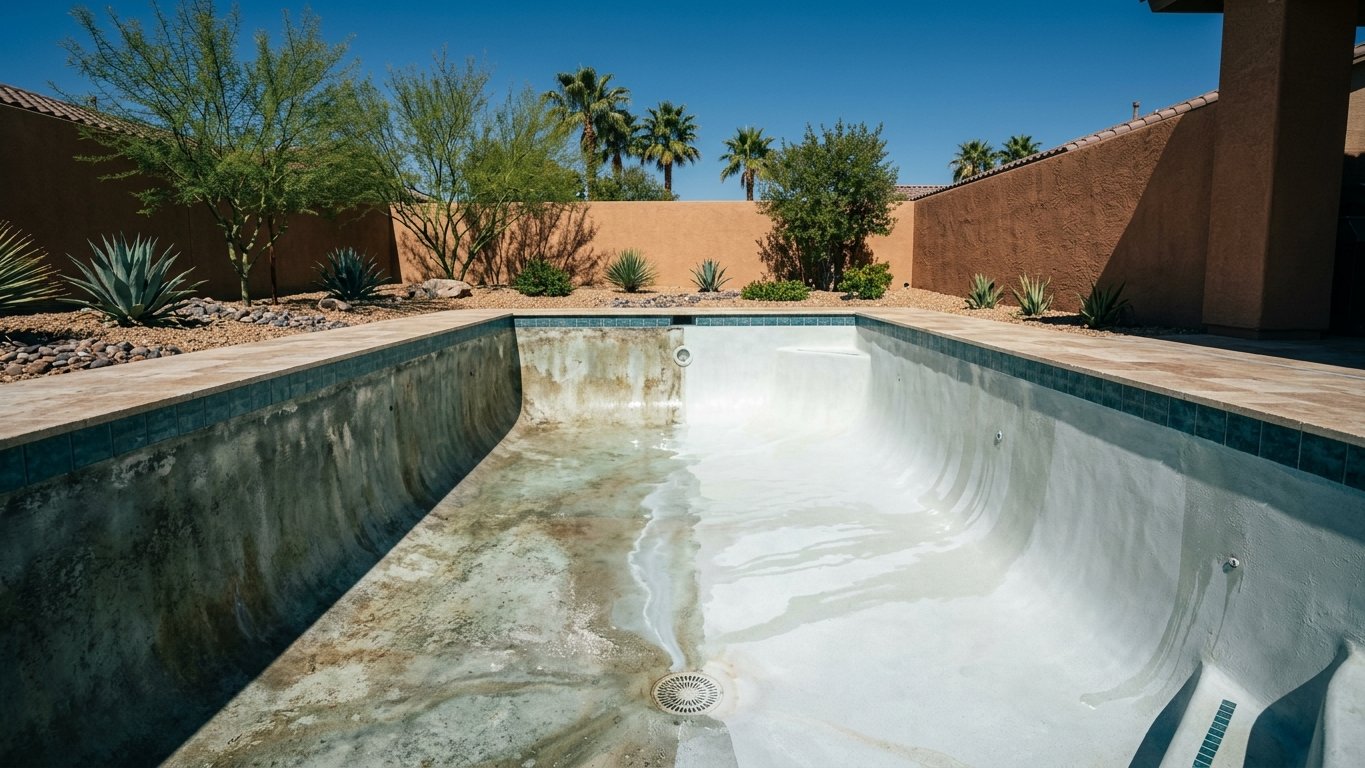
Sometimes a pool looks far worse than it actually is. The plaster underneath is still sound, but years of stains, mineral scale, and a built-in layer of algae have worked into the surface where no amount of brushing will reach. A drain and acid wash strips that layer away and exposes the clean plaster beneath — often transforming the look of a dingy, stained pool and buying years before a full resurface is needed. It’s aggressive work, though, and in Las Vegas the draining itself has to be handled with care, which is why it’s a job for careful hands rather than a shortcut.
What an acid wash removes
An acid wash works by etching off a thin top layer of the plaster, and with it everything that has embedded into that layer. Pool plaster is porous, so over the years stains from minerals, leaves, and organics soak in, calcium scale bonds to the surface, and algae establishes itself in microscopic pits where brushing can’t dislodge it. Washing that surface layer away takes the staining and buildup with it and reveals the fresher plaster underneath. The result on a heavily stained but structurally sound pool can be dramatic — a surface that looked beyond help comes back looking close to new, without the cost and downtime of a full resurface.
The key qualifier is structurally sound. An acid wash improves the appearance of good plaster that’s stained; it doesn’t fix plaster that’s worn out. Understanding that distinction is what keeps it from being misused.
When stripping the surface is the right move
Choosing between an acid wash and resurfacing comes down to the condition of the plaster, not just how it looks. An acid wash is the right call when the surface is heavily stained or scaled but the plaster itself is still solid — smooth, intact, with enough thickness to give up a thin layer. When the plaster is already rough, thinning, hollow in places, or exposing its aggregate, removing more of it only hastens its failure, and resurfacing is the smarter investment. Because every acid wash sacrifices a little surface, a pool can only take a limited number across its lifetime, so it’s not a maintenance step to repeat casually.
We assess whether your plaster has the thickness and integrity to handle a wash, and tell you honestly when a pool has reached the point where a full full pool renovation in Las Vegas is the better path than stripping the surface again.
Why it has to be done by hand, carefully
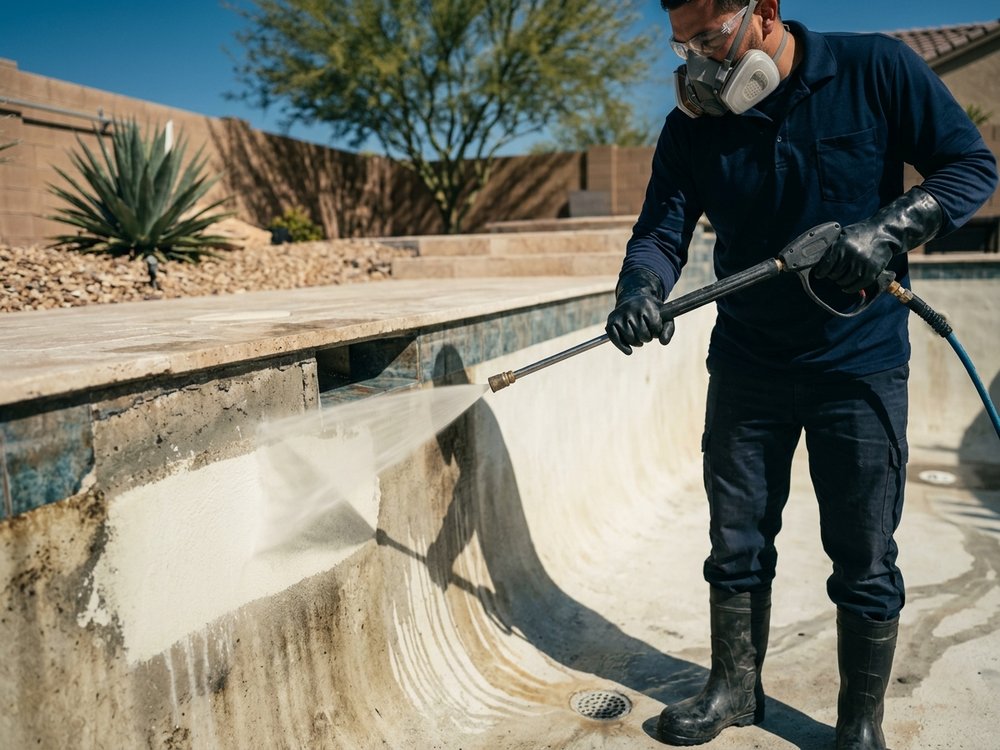
Acid washing is deliberately aggressive — it dissolves plaster — and that’s exactly why control is everything. The work is done by hand, section by section, wetting the surface and applying the acid evenly, watching the timing, and rinsing and neutralizing before moving on. Done with that care, it removes just the stained top layer. Done carelessly — left on too long, applied unevenly, or rushed — it can streak the surface, etch too deeply, and thin the plaster more than intended, taking life off the finish you were trying to save. The acid also has to be handled and neutralized safely throughout. None of this is suited to a quick, careless approach, which is why an acid wash is skilled, methodical work rather than a fast fix.
What to expect from the project
A drain and acid wash runs as a managed sequence. The pool is drained carefully, the surface is washed by hand to strip the stained layer and expose clean plaster, and then the pool is refilled and started back up. The startup matters: freshly exposed plaster benefits from careful balancing as the pool comes back online, both to protect the surface and to keep new staining or scaling from setting in immediately in our mineral-heavy water. The whole process is typically completed without the extended downtime of a resurface, which is part of its appeal for a pool that mainly needs to be cleaned up rather than rebuilt.
It’s worth setting expectations on the result. An acid wash reveals the plaster that’s already there — it makes a stained surface clean, but it doesn’t turn old plaster into new plaster. A surface with some age on it will look dramatically better and far brighter, but it’s still the same finish underneath, now with a little less thickness than before. For a pool that’s structurally fine and simply looks neglected, that’s exactly the right outcome and a smart use of money. For a pool whose plaster is genuinely worn, the honest answer is that resurfacing is the better spend, and we’ll say so rather than selling a wash that buys only a short reprieve.
Desert factors in draining and washing
In Las Vegas, the draining half of the job carries its own considerations and can’t be treated as an afterthought. An empty pool can be affected by ground conditions and by the desert heat working on the exposed shell, so it shouldn’t sit drained any longer than the work requires. Pool water also can’t simply be discharged anywhere — there are rules governing where it can go and how it’s handled, and a responsible drain follows them. We keep these general realities front of mind: we manage the drain, do the wash, and handle the refill and startup as one careful process, so the pool isn’t left exposed and the freshly stripped surface is brought back correctly. The heat also means timing the work so the surface isn’t baking dry mid-process.
If your pool’s plaster is sound but buried under stains, scale, and algae, call or text us to find out whether an acid wash will bring it back.
SERVICE VERIFY: confirm Las Vegas Pool Cleaner offers this exact service (and any equipment/credential it requires) before launch.
AUTHORITY LINK TODO: add one verified outbound source (see references/authority-domains.md) that supports a specific claim on this page, in-paragraph, then set authorityVerified: true.