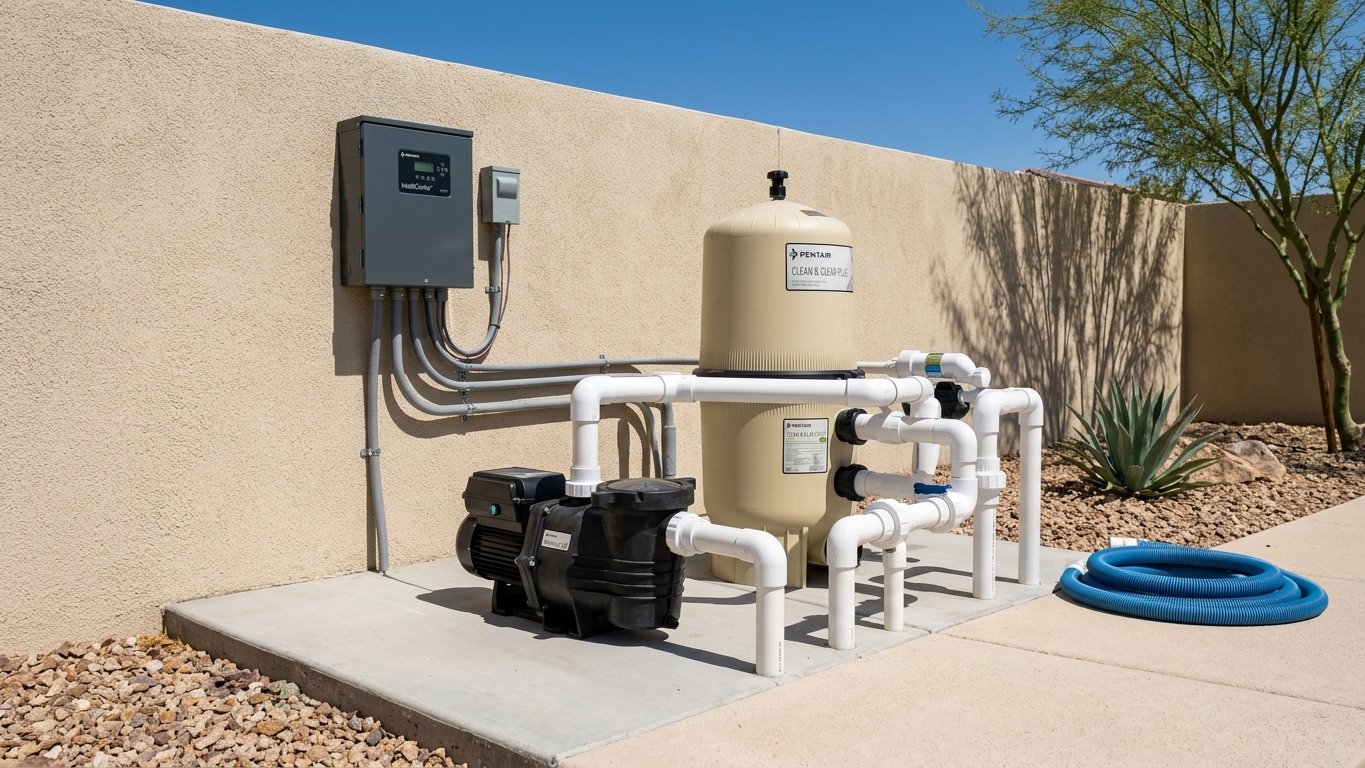
An aging equipment pad quietly costs you money every month — an old single-speed pump running flat-out, a tired filter making the whole system work harder, and manual timers that don’t run anything efficiently. Renovation is the natural moment to fix that, because the pool is already open and you’re investing in it anyway. Swapping a single-speed pump for a variable-speed model, adding modern automation, and upgrading a worn filter pays back in efficiency over the long Las Vegas run season, and leaves the renovated pool running cheaper and quieter than it did before.
Single-speed to variable-speed pumps
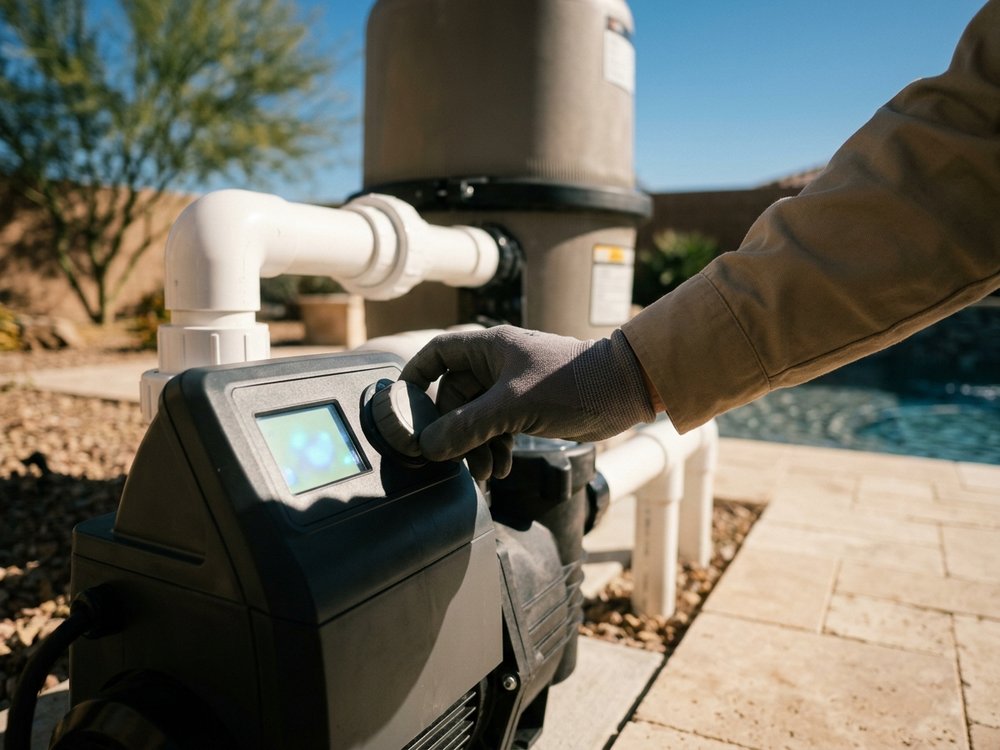
The pump is the heart of the equipment pad and usually its biggest energy user, which makes it the upgrade with the most to gain. A single-speed pump has one setting — full power — so it draws maximum energy any time it runs, even for routine filtering that doesn’t need that much flow. A variable-speed pump runs at a low, efficient speed most of the time and ramps up only when a task like vacuuming or running a feature actually calls for it. The energy difference is substantial, and the quieter operation at low speed is a noticeable bonus in a backyard you spend time in.
That efficiency matters more in Las Vegas than almost anywhere, because pools here run long hours through a long season. The more hours a pump runs, the more a flat-out single-speed unit costs relative to a variable-speed one, so the savings compound across the year — ENERGY STAR certifies the most efficient pool pumps if you want to compare models. For most pools, the pump is the first and highest-value piece to modernize.
Modern automation for the pad
Older pools are run by hand — walking out to the pad, flipping valves, and setting mechanical timers that don’t adapt to anything. Modern automation replaces that with a panel and app control that manages the pump, heater, lights, and features on schedules you set, adjustable from inside the house or away from home. The convenience is obvious, but the efficiency angle is just as important: when scheduling is effortless, the pump runs when it should and stays off when it shouldn’t, which over a long desert run season translates into real savings. Automation also makes a variable-speed pump easier to get the most out of, since the speeds and schedules can be dialed in and then left to run themselves.
There’s a practical maintenance benefit too. With everything on one controller, it’s far easier to adjust the pool to the season — longer filtration in the heat of summer, scaled back when the pool cools off — without trekking out to reset mechanical timers each time. For owners who travel, being able to check and adjust the pool from a phone means equipment isn’t left running wrong for weeks while you’re away. In a climate where summer pushes a pool hard and the run schedule genuinely changes through the year, that kind of easy, responsive control keeps the pool both efficient and properly maintained instead of locked to one fixed setting.
Filter upgrades
The filter is the quieter half of the efficiency equation. A tired, undersized, or worn filter makes the entire system work harder, drives more frequent backwashing, and lets water quality slip. Upgrading to a properly sized modern filter lets the system run efficiently, holds cleaner water with less effort, and reduces the maintenance the filter itself demands. Paired with a variable-speed pump, a good filter rounds out a pad that moves and cleans water with far less energy than the old setup. It’s an easy piece to overlook next to the pump, but it’s part of why a modernized pad runs better as a whole.
There’s a desert wrinkle to filtration as well. Las Vegas pools deal with heavy dust, blowing debris, and the high bather load of a long swim season, all of which put more demand on the filter than a pool in a milder, cleaner-air climate would see. An undersized or worn filter struggling against that load both runs inefficiently and lets fine material slip through, which shows up as cloudy or dull water. A filter sized correctly for your pool and our conditions keeps the water clearer with less backwashing — and in a region where every gallon of backwash water matters, fewer backwash cycles is a real benefit on top of the efficiency. We look at whether your existing filter is keeping up or quietly holding the rest of the pad back.
Renovation is the moment to modernize
The reason renovation is the right time to upgrade is simple: the pool is already open, you’re already investing in it, and handling the equipment in the same window avoids paying for separate trips and labor down the road. Doing the resurface, tile, or deck while leaving a decade-old single-speed pump and worn filter in place is a missed opportunity — you’d be protecting a fresh surface with equipment that’s costing you every month. Folding the pad upgrade into the project means the renovated pool comes back not just looking new but running efficiently. It’s a standard part of our pool renovation and upgrade services, and we’ll tell you which pieces are worth upgrading now and which still have life left.
Desert factors that make efficiency pay
Las Vegas conditions are what turn equipment efficiency from a nice-to-have into a clear win. The long, hot run season means the pump and filter operate far more hours than they would in a milder climate, and every one of those hours is where an efficient pad saves money — so the cumulative payback on a variable-speed pump and a right-sized filter is larger here. The heat also works on the equipment itself: a hard-running, undersized pad takes more strain in desert temperatures than a modern, properly matched one. Upgrading to efficient, appropriately sized equipment both lowers running costs and eases the load on the system through the brutal summer months, which is exactly when the pool is working hardest.
If your equipment pad is aging or you’re already renovating, call or text us about modernizing the pump, automation, and filter while the pool is open.
SERVICE VERIFY: confirm Las Vegas Pool Cleaner offers this exact service (and any equipment/credential it requires) before launch.