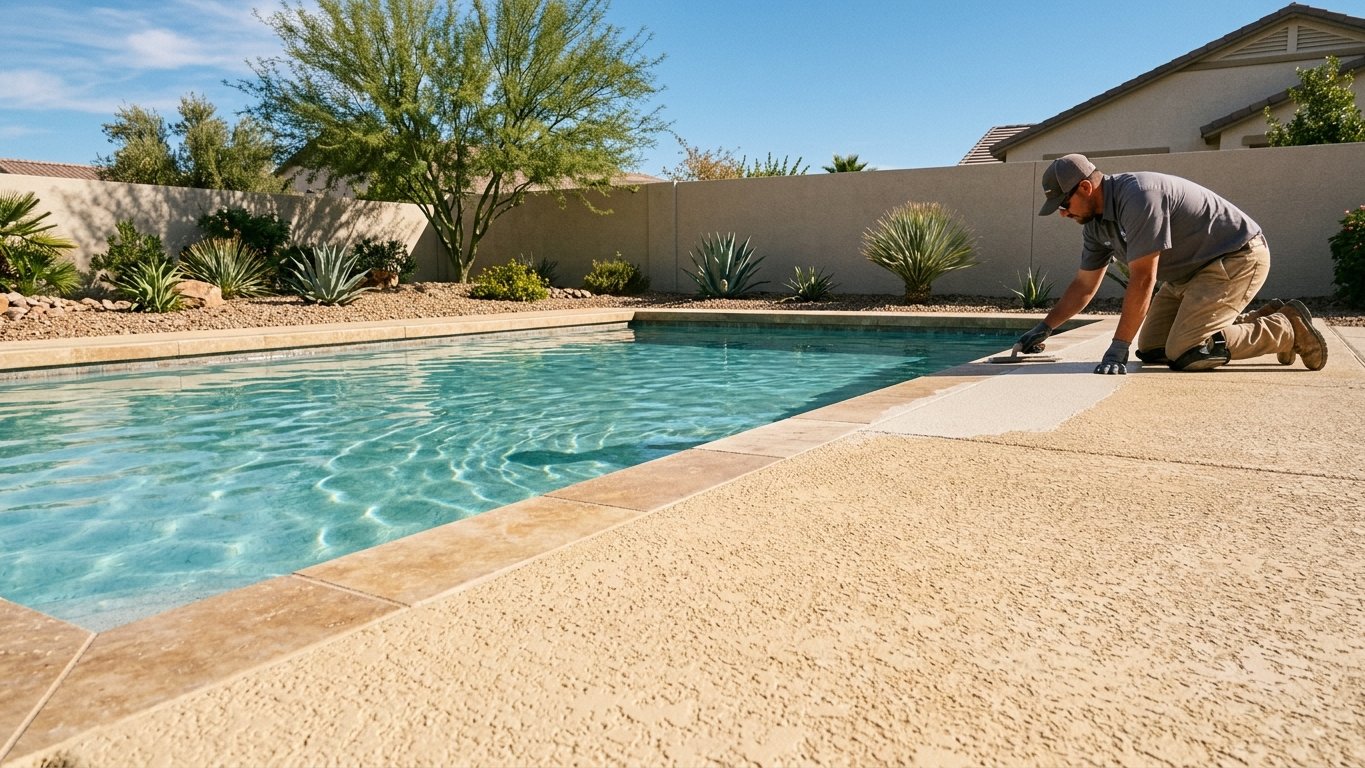
A pool deck in Las Vegas lives under some of the harshest conditions any concrete faces — full sun for most of the year, temperature swings that work the slab, and surface temperatures in summer that can make bare concrete genuinely uncomfortable to stand on. Over time that takes a toll: decks crack, the surface spalls and flakes, and old coatings fade or peel. Resurfacing with a cool-deck or modern coating restores grip, drops the surface temperature underfoot, and pulls the whole backyard back together visually. It’s one of the highest-impact pieces of a pool renovation.
When the deck needs more than a patch
Not every flaw calls for a full resurface, so it’s worth knowing where the line is. A single isolated crack or a small chip can be spot-repaired. Resurfacing becomes the smarter spend when the problems are widespread: cracking across multiple areas, surface spalling where the top layer of concrete is flaking or breaking apart, old coatings that have faded or are peeling, and a surface that’s simply become too hot or too slick to enjoy. If you find yourself patching the same spots season after season, or the deck just looks worn out end to end, resurfacing restores it more cleanly and lasts far longer than continuing to chase individual cracks.
Desert sun accelerates all of this. UV breaks down old coatings, and the constant heat-and-cool cycle stresses the slab, so Las Vegas decks tend to reach the resurfacing point faster than decks in gentler climates. There’s also a knock-on effect worth knowing: a deck that’s spalling and shedding grit drops more debris into the pool, which means more for the filter and the cleaning routine to deal with. Restoring the deck surface quietly takes some load off the pool itself. We look at the deck honestly and tell you whether a repair will hold or whether resurfacing is the better investment — it’s part of our pool resurfacing and renovation work.
Cool decks and modern coatings
The finish you put down is what determines how the deck performs in the heat. Cool-deck coatings are textured, lighter-colored surfaces engineered to reflect more sunlight and absorb less heat than bare gray concrete, which keeps them cooler to walk on in direct sun. Modern decorative options go further — there are textured overlays, stamped and stained finishes, and aggregate looks that combine the heat and grip benefits with a finished, designed appearance. The right choice depends on how you use the space, the look you want, and how much the deck bakes in afternoon sun.
What these finishes share is that they’re built for the two things a desert deck has to do: stay walkable when it’s scorching and stay safe when it’s wet. Color plays into this as well — lighter tones reflect more heat and stay cooler underfoot, which is a practical consideration in Las Vegas and not just an aesthetic one, so the look and the performance of a finish are tied together here in a way they aren’t in milder climates. We walk you through the options and match a finish to your backyard rather than defaulting to one look for every deck.
Grip and lower surface temperature
Two practical benefits drive most deck resurfacing here, and they’re worth separating. The first is temperature: bare concrete in Las Vegas summer sun gets hot enough that crossing the deck barefoot is a quick, hopping affair. A cool-deck finish reflects more sun and holds less heat, so the surface stays meaningfully more comfortable underfoot — not cold, but the difference between usable and not on a 110-degree afternoon. The second is grip. A wet pool deck can be slick, and a textured resurfacing finish adds traction right where people are barefoot and the surface is wet. Together, lower temperature and better grip make the deck both more comfortable and safer to be around, which is the whole reason most owners resurface.
What the project involves
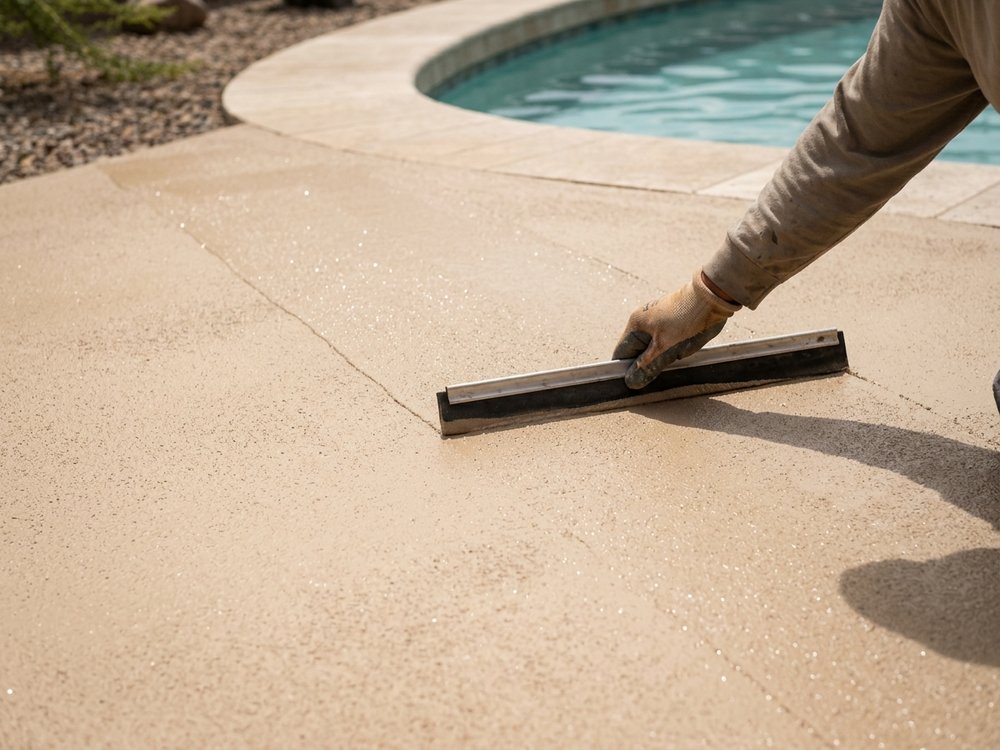
Deck resurfacing starts with preparing the existing concrete — cleaning it thoroughly, repairing damage, and treating cracks so the new surface bonds well and the old flaws don’t telegraph through. Existing control joints are respected since the slab still needs room to move. The chosen coating or overlay is then applied, textured for grip, and finished and sealed. Good surface prep is the part that determines whether the result lasts; a coating laid over a poorly prepped deck will fail early no matter how good the product is, especially under desert sun and heat cycling.
Timing matters in our climate too. Coatings and overlays cure best within a sensible temperature range, and applying them to concrete that’s baking at midday in summer can compromise how they set and bond. Working in the right conditions — and giving the new surface time to cure before it’s back in full sun and foot traffic — is part of doing the job so it holds. A resurface that’s rushed onto a scorching slab to save a day can fail in ways that a properly timed application simply won’t, which is the kind of detail that separates a deck that lasts years from one that’s peeling by the next summer.
Desert factors that shape the work
Las Vegas conditions sit at the center of every deck decision. The sun is the obvious one — it heats the surface, which is why cool-deck finishes exist, and its UV degrades coatings over time, so finishes have to be chosen to hold up. The bigger structural factor is thermal movement: concrete expands and contracts with the valley’s wide temperature swings, and a deck that’s coated without accounting for that movement will crack and fail at the surface. A resurface done for this climate treats the cracks, respects the joints where the slab moves, and uses a coating suited to heat, so the new surface handles the desert instead of fighting it.
If your pool deck has gone cracked, flaky, or too hot to cross barefoot, call or text us and we’ll recommend a finish built for Las Vegas sun.
SERVICE VERIFY: confirm Las Vegas Pool Cleaner offers this exact service (and any equipment/credential it requires) before launch.
AUTHORITY LINK TODO: add one verified outbound source (see references/authority-domains.md) that supports a specific claim on this page, in-paragraph, then set authorityVerified: true.