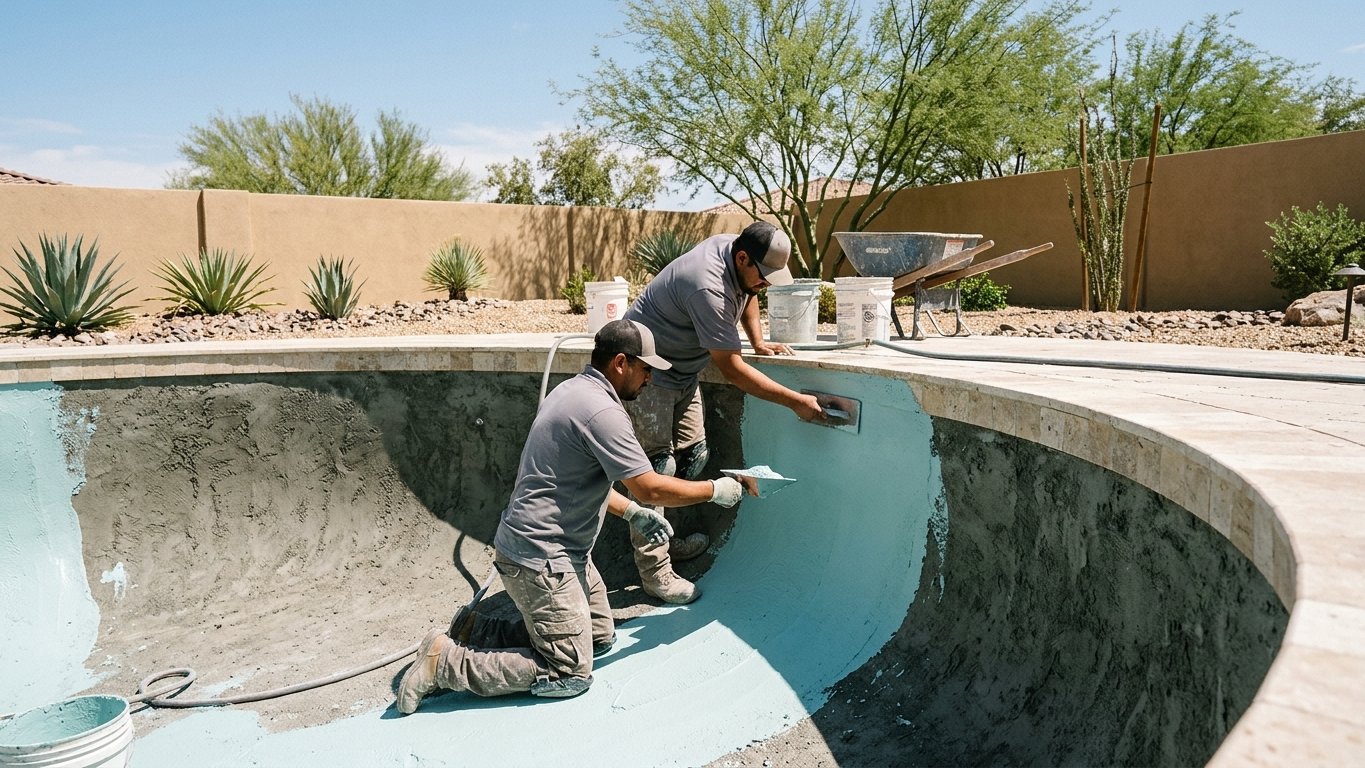
The interior surface of your pool takes more abuse than any other part of it — constant water, harsh sun, and chemistry working on it around the clock. When plaster turns rough, stains set in that won’t scrub out, or you start finding hollow spots where the surface is separating from the shell, resurfacing is what restores both the look and the watertight integrity of the pool. In Las Vegas, the finish you choose and how carefully it’s installed make the difference between a surface that lasts well over a decade and one that fails early.
Signs your plaster is done
Plaster wears out gradually, then all at once. Early on you’ll notice it feels rougher underfoot — a chalky or gritty texture as the smooth top layer erodes away. Stains appear that no longer brush or scrub out, often from minerals, leaves, or algae that has worked into the porous surface. The more serious signals are structural: hollow-sounding areas when tapped, where the plaster has delaminated from the shell, and cracks or exposed aggregate. Once you’re seeing several of these together, patching stops being worthwhile and a full resurface is the better spend. Las Vegas pools tend to reach this point sooner than pools in milder climates because hard water and aggressive chemistry etch and roughen the surface faster.
Marcite, quartz, and pebble finishes
Picking a finish is the biggest decision in a resurfacing project, and in the desert it has real consequences for how long the work lasts. Traditional white marcite is the most affordable and gives a clean, smooth, classic look, but it’s the shortest-lived option and the quickest to show stains and etching. Quartz finishes blend crushed quartz aggregate into the plaster, producing a tougher, more stain-resistant surface with a wider range of colors and a slightly textured feel. Pebble finishes use small natural pebbles for the most durable and longest-lasting surface of the three; the texture also does a good job hiding minor staining over time.
For Las Vegas conditions, the more durable finishes usually earn their higher cost. Hard water deposits calcium and intense UV works on the surface every day, and quartz and pebble simply stand up to that environment better than basic marcite. We walk you through the trade-offs and help you choose a finish suited to how you use the pool and how long you want it to last — part of our our Las Vegas pool renovation services.
Finishes built to resist hard water and UV
The desert presents two surface enemies at once: mineral-heavy water that wants to scale, and relentless sun that breaks things down. A finish chosen for this climate has to resist both. Denser aggregate finishes are less porous than plain plaster, which gives scale and stains fewer footholds and makes the surface easier to keep clean. Color choice matters too — certain mid-tone finishes mask the faint mineral haze that hard water can leave better than a stark bright white, which shows every imperfection. We steer customers toward finishes and colors that look good for years in our water, not just on the day the pool is refilled.
What the project involves
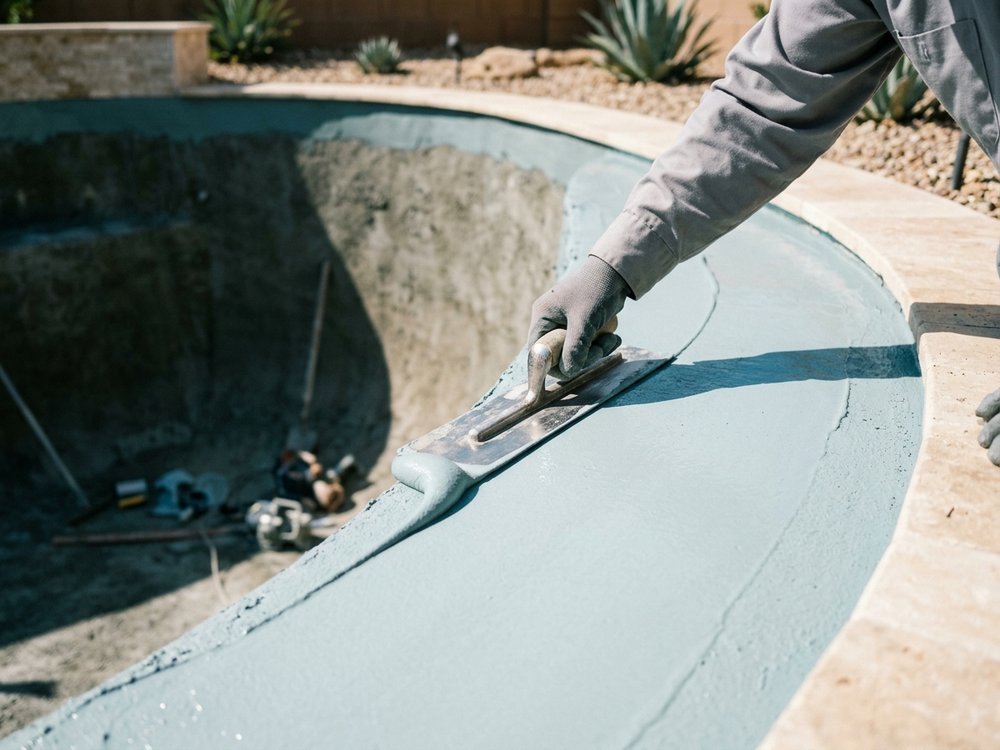
A resurfacing project follows a clear sequence. First we drain the pool — carefully, given the desert factors covered below. The old surface is then prepped or removed: depending on its condition, that can mean a bond coat over sound plaster or a full chip-out down to the shell. New tile and coping are often handled in the same window since the pool is already empty, which is the efficient time to do it. The new plaster, quartz, or pebble finish is then troweled on, and the pool is refilled immediately so the surface can begin curing underwater.
That refill-and-startup phase is where experience shows. Fresh plaster cures over the first weeks underwater, and the chemistry during those early days has an outsized effect on how the surface ends up looking and lasting. Brushing, careful balancing, and managing the water properly during startup prevent staining, scaling, and surface defects that would otherwise be locked in permanently. New plaster also releases material into the water as it cures, which shifts the chemistry quickly and demands closer attention than a settled pool — getting the calcium and pH right during this window is what keeps a new surface from clouding, mottling, or developing a scale haze before it has even had a chance to harden. Skipping or shortcutting startup is one of the most common reasons a resurface looks disappointing within months, and it’s entirely avoidable.
This is also why a resurface isn’t a job to hand to the lowest bidder who disappears the day the plaster goes in. The surface and the startup are a single piece of work. We stay with the project through refill and the early curing so the finish you paid for is the finish you actually end up with.
Desert factors that shape the work
Las Vegas conditions touch every stage of a resurface. Draining is the first one: an empty pool can be pushed up by groundwater or stressed by heat, and pool water can’t simply be sent anywhere, so the drain has to be planned and managed rather than rushed. The 110-degree-plus summer heat also affects how fresh plaster cures — too much sun and heat on a green surface can cause it to set unevenly or develop marks, so timing and care during application and the first days of startup matter.
Then there’s the water itself. The valley’s tap water is very hard, and heavy evaporation concentrates those minerals further, so a brand-new surface meets scaling pressure from the very first fill. Keeping calcium and chemistry in range from day one is what protects the new finish, which is why we set the startup up correctly and recommend a balance plan afterward.
When your pool’s surface has gone rough, stained, or hollow, call or text us for an honest look and a finish recommendation built for Las Vegas water.
SERVICE VERIFY: confirm Las Vegas Pool Cleaner offers this exact service (and any equipment/credential it requires) before launch.
AUTHORITY LINK TODO: add one verified outbound source (see references/authority-domains.md) that supports a specific claim on this page, in-paragraph, then set authorityVerified: true.