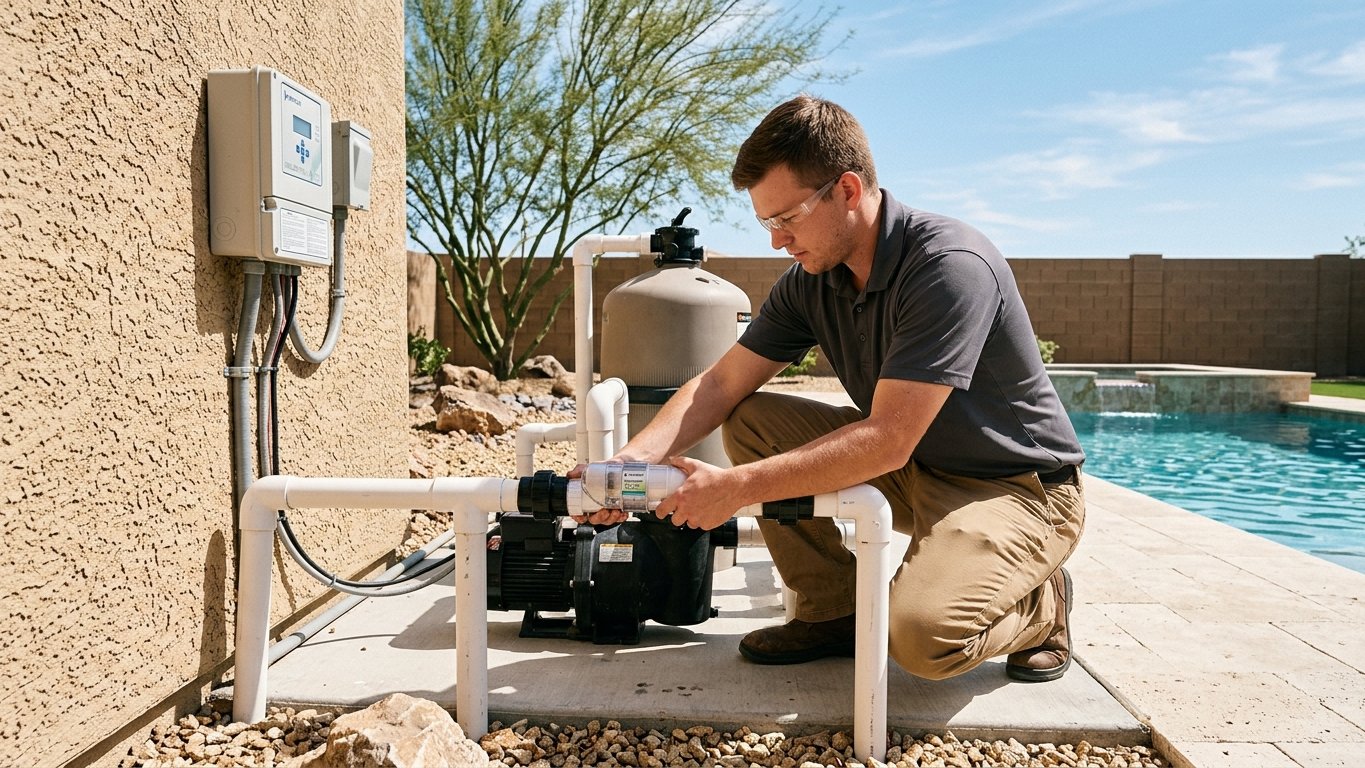
Plenty of Las Vegas owners use a renovation as the moment to leave traditional chlorine behind and switch to a saltwater system. The appeal is water that feels softer and silkier on the skin, and far less hands-on chemical dosing week to week. A salt pool isn’t chlorine-free — it makes its own chlorine from dissolved salt — but it delivers that sanitizer in a steady, gentle way instead of the spikes of manual chlorination. Done right, converting comes down to sizing and installing the correct chlorinator and dialing in the chemistry for the new system, with one desert-specific bit of upkeep to keep in mind.
How a salt pool actually works
It’s worth clearing up the biggest misconception first: a saltwater pool is still a chlorine pool. The difference is where the chlorine comes from. Instead of you adding it by hand, a salt chlorinator passes the water through a cell that converts dissolved salt into chlorine continuously as the pump runs. The water carries a low salt level — far milder than seawater, to the point most people can’t taste it — which is part of what gives it that softer feel. So the switch doesn’t remove chlorine from the equation; it automates it, producing a steady supply rather than the peaks and valleys of manual dosing. Understanding that up front sets the right expectations for what a conversion does and doesn’t change.
The continuous-versus-spikes difference is more than a technical detail. A hand-dosed pool tends to swing — high right after a dose, drifting low before the next one — and those swings are part of what makes traditional chlorination feel harsh and what lets algae get a foothold when the level dips. A salt system holds a steadier sanitizer level, which is both gentler on swimmers and more consistent at keeping the water clear between service visits.
Softer-feeling water and less hands-on dosing
Two benefits drive most conversions, and they’re worth taking on their own terms. The first is feel. Because a salt system holds a low, steady salinity and generates chlorine gradually, many swimmers find the water gentler on skin and eyes and silkier to the touch than a traditionally chlorinated pool, especially one that gets dosed in big swings. The effect is subtle rather than dramatic, but it’s real and it’s the reason a lot of people prefer salt.
The second is maintenance. With the chlorinator making sanitizer on its own, you’re no longer adding chlorine by hand every few days, which removes one of the more tedious parts of pool ownership. The water still needs balancing and the system still needs attention, but the day-to-day chlorine chore largely disappears. For owners who want a lower-touch pool, that’s a meaningful upgrade — and it pairs naturally with the other other pool renovation projects that modernize how a pool runs.
Sizing and installing the chlorinator
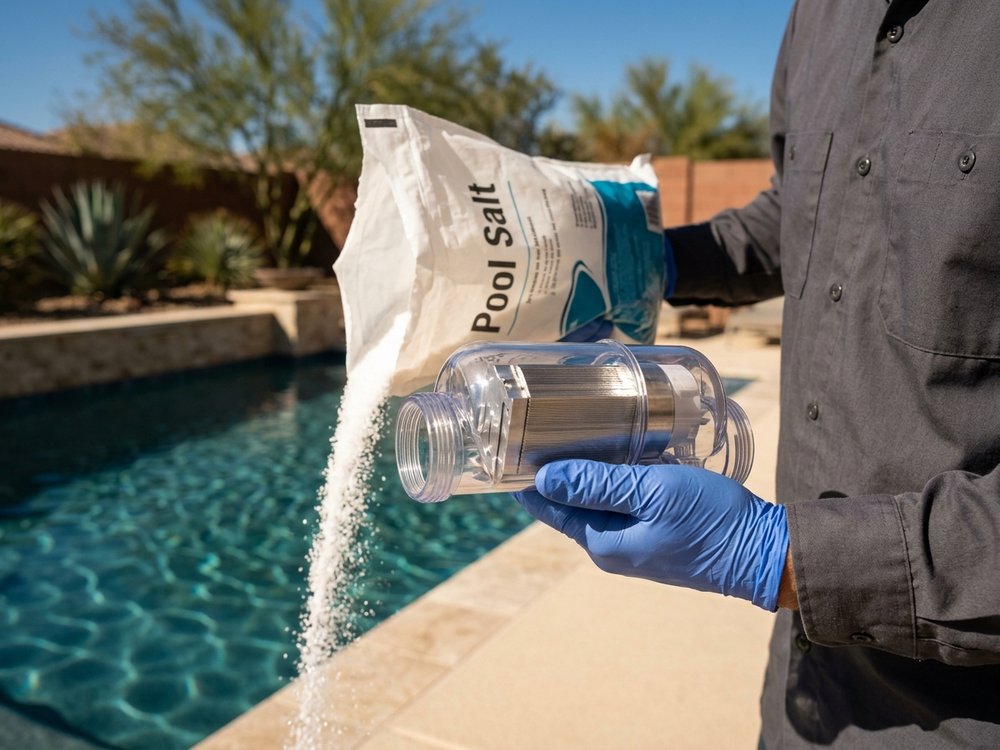
The heart of a conversion is the salt chlorinator, and getting it right is mostly about sizing. The chlorinator — its control unit and the cell the water flows through — has to be matched to the volume of your pool so it can generate enough chlorine to keep up with demand, including the heavy demand a Las Vegas summer puts on sanitizer. An undersized unit struggles to hold sanitizer when the pool needs it most, so the sizing is the part that matters. Once the right unit is selected, it’s installed on the equipment pad, wired in, and the correct amount of pool-grade salt is added to bring the water to the proper salinity. For most pools this is a clean addition to the existing equipment rather than a major rebuild, which is exactly why a renovation — when the pad may already be getting attention — is a convenient time to make the switch.
What to expect after converting
After the chlorinator is installed and the salt is dissolved in, the system is balanced and the chlorine output is dialed to hold a proper sanitizer level. From there the pool largely runs itself on the sanitizer side, with the chlorinator producing chlorine as the pump runs. You’ll still test and balance the water, and the salt level gets topped up occasionally as it’s diluted by rain or refilling, but the routine is lighter than hand-dosing chlorine. The transition itself is usually smooth, and most owners notice the softer water feel fairly quickly once the system is running.
It’s a fair point to set expectations on what doesn’t change. A salt pool still needs the rest of its chemistry watched — pH, alkalinity, stabilizer, and especially calcium hardness in our water — and during a hot Las Vegas summer the sanitizer demand is high enough that the chlorinator has to be sized and run to keep up. A salt system is lower-effort, not no-effort, and the pools that stay trouble-free are the ones where the water is still checked and balanced regularly. Owners who go in understanding that get the best of the switch: gentler, nicer-feeling water and a real reduction in hands-on chlorine work, without the false impression that the pool now takes care of itself entirely.
Hard water and salt cell care
There’s one desert-specific reality every salt-pool owner in Las Vegas should know going in: the salt cell needs care in our hard water. The cell generates chlorine on metal plates, and the valley’s high calcium readily scales onto those plates, which reduces how effectively the cell produces chlorine and, left unchecked, shortens its life. The defense is twofold — keep the water balanced, calcium and pH especially, to slow how fast scale forms, and inspect and clean the cell periodically to clear any buildup so it keeps generating efficiently. It’s manageable, ordinary upkeep, but it’s genuinely more important here than in soft-water regions, and a salt system run without it will underperform. We make sure the system is set up correctly and that you know how to keep the cell healthy in our water.
If you’re renovating and want softer water with less hands-on chlorine, call or text us about converting your pool to a properly sized salt system.
SERVICE VERIFY: confirm Las Vegas Pool Cleaner offers this exact service (and any equipment/credential it requires) before launch.
AUTHORITY LINK TODO: add one verified outbound source (see references/authority-domains.md) that supports a specific claim on this page, in-paragraph, then set authorityVerified: true.