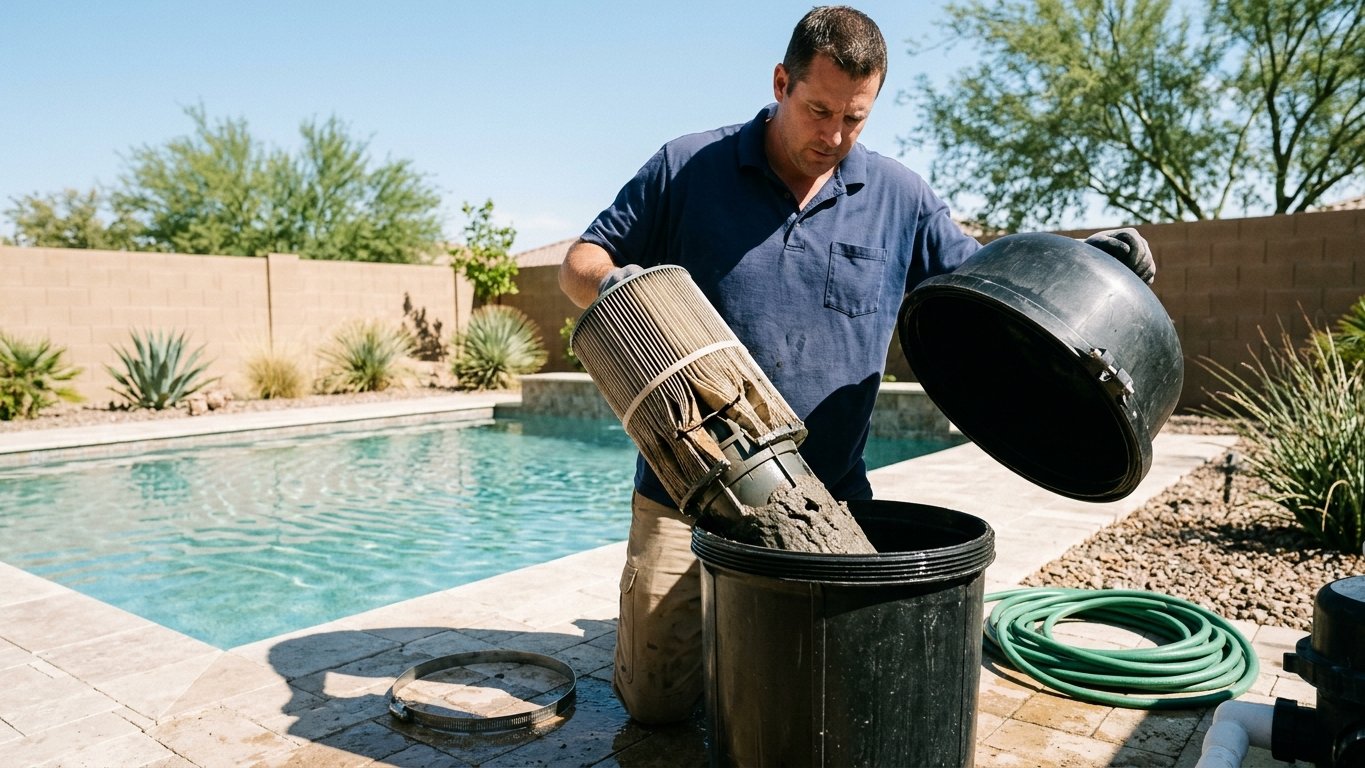
A pool filter that can’t do its job quietly undermines everything else — you can balance the chemistry perfectly and still end up with cloudy or green-tinged water if the filter is letting particles slip through. Filter repair is different from a routine filter cleaning: here we are fixing torn, cracked, or broken internals rather than just rinsing the element. It is one piece of our pool equipment repair work across the Valley.
Symptoms of a failing filter
Filter trouble usually shows up in one of two ways: pressure that is wrong, or dirt that comes back. Persistently high pressure that a cleaning won’t fix points to scaled or clogged media. Low pressure, weak return flow, or grit and debris blowing back into the pool points the other direction — toward damage that is letting water bypass the media. Cloudy water that refuses to clear despite good chemistry is the classic sign that the element itself has failed. We read the pressure, open the tank, and inspect the internals to separate a dirty filter from a broken one.
The pressure gauge is the filter’s most honest indicator, and learning to read it saves a lot of guesswork. Every filter has a normal “clean” pressure, and as the element loads up with debris that number climbs — which is expected and tells you when a cleaning is due. The problems start when the pressure stops behaving: a number that stays sky-high right after a thorough cleaning means the media is scaled or spent rather than just dirty, while a gauge that suddenly drops or reads low can mean a cracked element or a break that is letting water shortcut past the media. When the gauge and the water clarity disagree with each other, something inside the tank is broken, and that is when an inspection earns its keep.
Cartridge, DE, and sand repairs
Each filter type fails in its own way, and we repair all three. Cartridge filters develop torn or collapsed pleats and split end caps that let water pass unfiltered. DE filters break grids and crack the manifold, dumping DE powder back into the pool. Sand filters crack their laterals and the standpipe, sending sand into the water and grit to the returns. We replace torn cartridges, broken DE grids, cracked laterals, manifolds, standpipes, and the o-rings and clamps that seal the tank — and we tell you when a cleaning would have done the job instead of a repair.
How hard water shortens filter life here
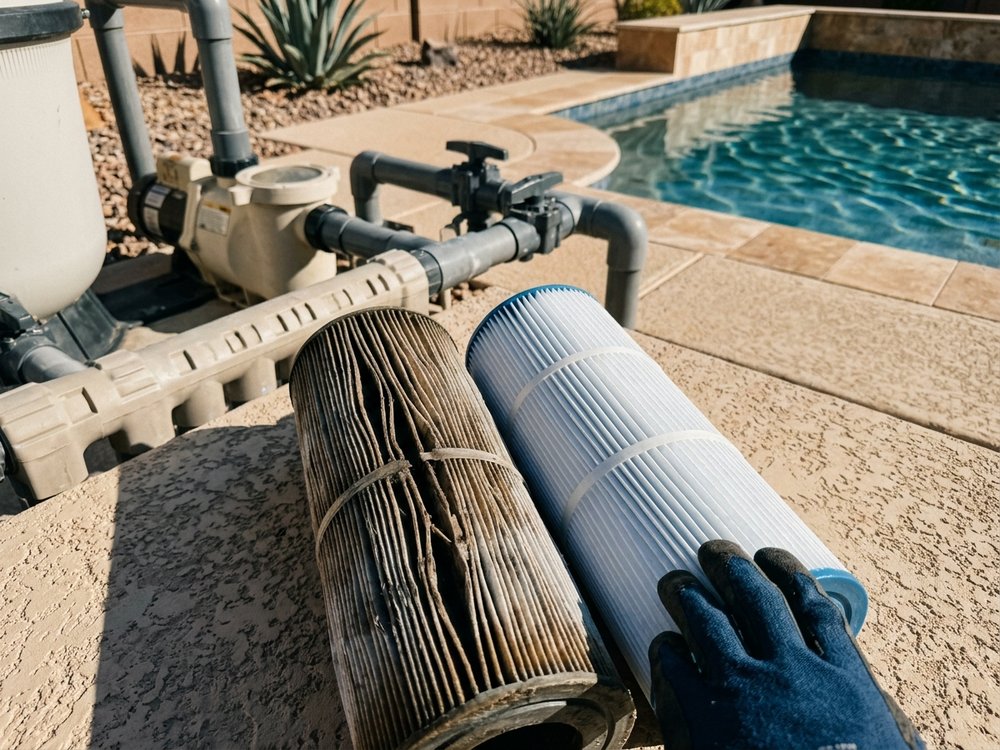
Las Vegas hard water is tough on filters specifically. The valley’s high mineral content deposits calcium and scale onto cartridge fabric, DE grids, and sand beds, stiffening pleats and clogging media so it can no longer rinse or backwash fully clean. An element that should flex and release dirt instead becomes brittle and packed with mineral. Layer on long summer run hours and the dust storms that periodically load the filter with fine debris, and elements here simply wear out faster than they would in softer water. We factor that local reality into whether your element has genuine life left or is truly spent.
It helps to picture what scale actually does to each media type. A cartridge’s job depends on its pleats opening and flexing so water passes through and trapped dirt rinses away; once calcium stiffens those pleats, they pack shut and the cartridge chokes on its own captured debris. A DE grid relies on a fine powder coating that backwashes off and is replaced; scale on the grids keeps the powder from seating evenly and shortens the grid’s life. A sand bed needs loose, sharp grains to catch particles; minerals cement the grains into clumps and channels, so water races through gaps instead of filtering. In every case the local water is quietly working against the very mechanism that makes the filter function, which is why a filter that looks fine can still be at the end of its useful life here.
Repair or replace your filter
We will not push a new filter when a repair will do, and we will not patch a filter that is past saving. A single torn cartridge, one broken grid, or a failed o-ring is an easy, affordable fix. But a cracked tank, a split manifold, or internals that are degrading everywhere at once tilt the decision toward replacement, because money spent on an old, failing filter is usually money wasted. We give you the repair cost and the replacement cost side by side, weigh them against the filter’s age and type, and let you make the call.
Matching the filter to a hard-water pool
When replacement is the answer, the choice of filter matters more in Las Vegas than in a gentler climate, because the water here punishes an undersized or poorly matched filter. A filter that is too small for the pool clogs and scales faster, demanding constant cleaning and giving up early. We look at your pool’s size, your typical debris load, and how the equipment is plumbed, and we steer you toward a filter with enough surface area to handle desert conditions without choking. Right-sizing the filter means longer stretches between cleanings, better water clarity through dust season, and an element that survives the hard water rather than surrendering to it in a couple of summers.
What to expect from a filter service
When we come out, we check the system pressure, then shut down and open the tank to inspect the element and internals directly. You get a clear diagnosis — dirty, damaged, or done — along with the parts needed and a realistic timeline to get them. Common cartridges, grids, and laterals are usually quick to source; some older or proprietary filters take longer. Once repaired or replaced, we reassemble the tank, confirm the pressure reads correctly, and verify the water is actually filtering clean again before we wrap up. And because we handle ongoing service too, we can keep the new element on a sensible cleaning schedule so hard-water scale never gets the head start it needs to ruin it early.
If your water won’t clear or debris keeps coming back to the pool, call or text us and we will find out whether your filter needs a cleaning or a real repair.
SERVICE VERIFY: confirm Las Vegas Pool Cleaner offers this exact service (and any equipment/credential it requires) before launch.
AUTHORITY LINK TODO: add one verified outbound source (see references/authority-domains.md) that supports a specific claim on this page, in-paragraph, then set authorityVerified: true.