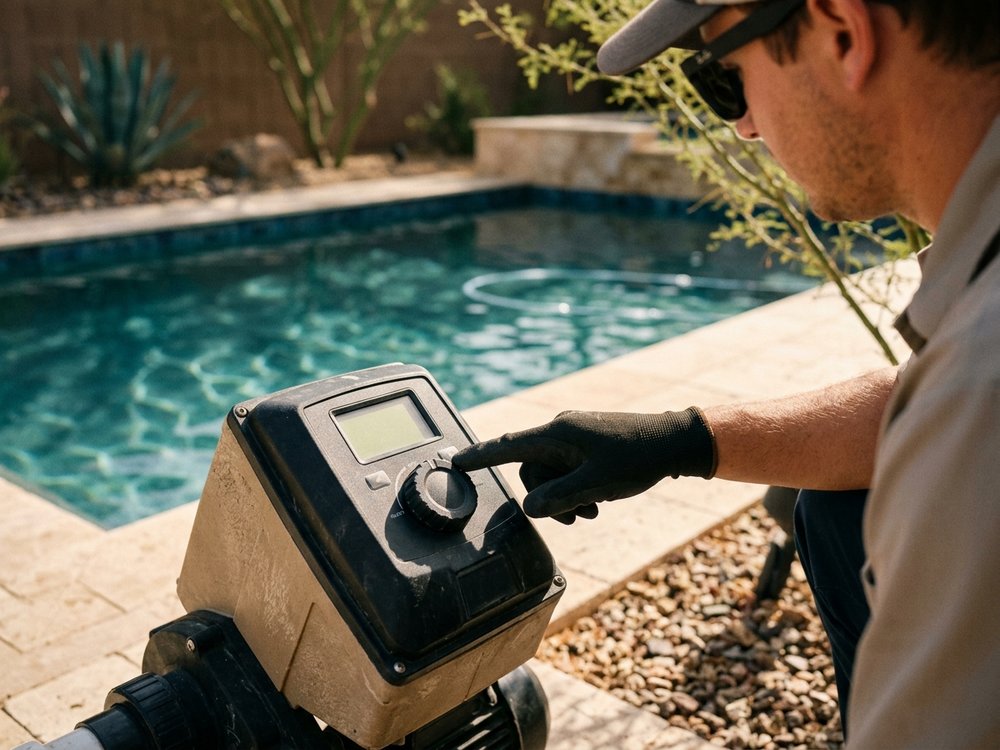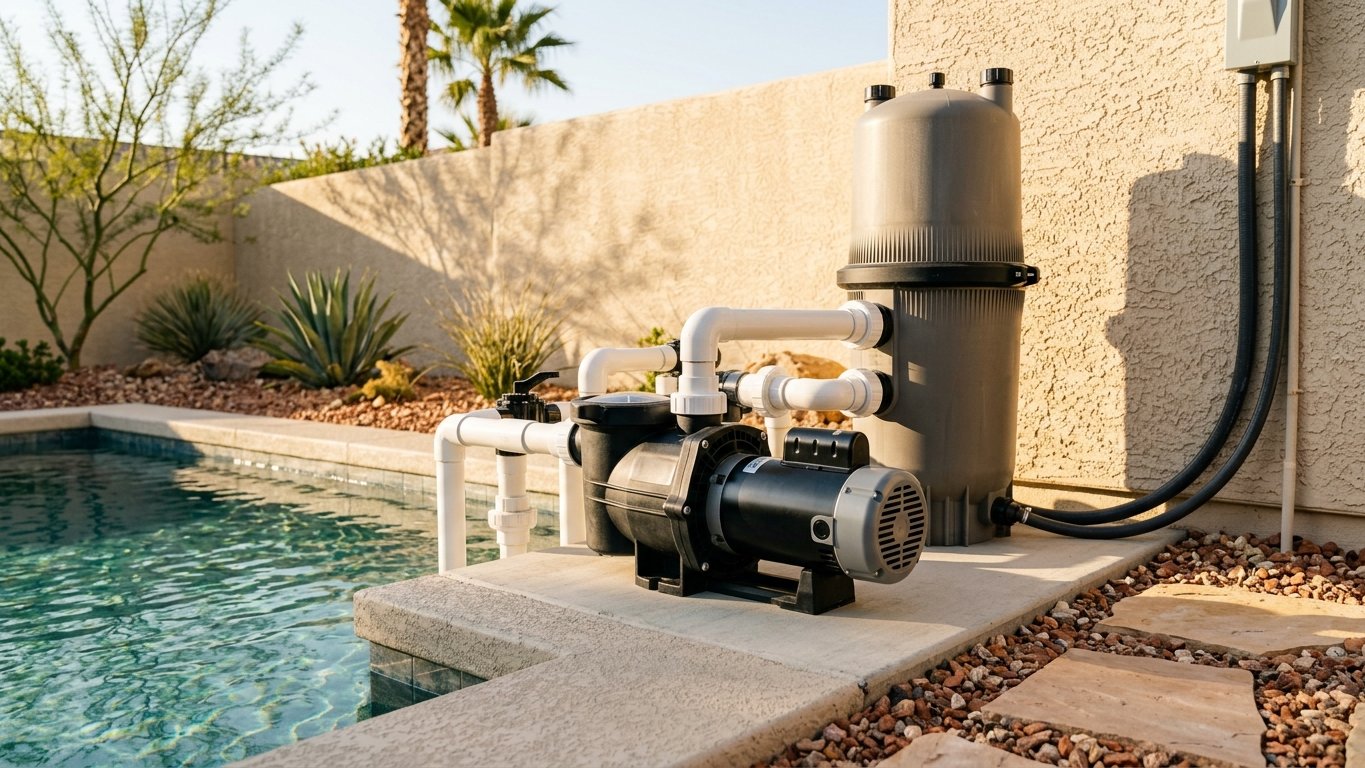
For most Las Vegas pools, a variable-speed pump is worth it, mainly because the desert demands long daily filtration and a variable-speed pump can do that work at a low, efficient speed instead of running flat out. Over the long Las Vegas run season, that efficiency adds up, and the pumps run far quieter as a bonus. The strongest case for one is timing: when an old pump dies, a variable-speed replacement is usually the smart long-term move rather than buying another single-speed unit.
How the Two Pump Types Differ
The core difference is simple. A single-speed pump has one setting — on, at full power. Every time it runs, it runs at the same high speed, whether the pool needs that much flow or not. It is the older, simpler design, and it treats every task the same way: maximum effort, all the time.
A variable-speed pump can change how fast it runs to match the job in front of it. For routine filtration, which is most of what a pool pump does, it can run slow and steady. When a task genuinely needs more flow, it ramps up. That ability to dial the speed to the need is the entire reason variable-speed pumps exist, and it is where their advantages come from.
Why Slower and Longer Wins
It seems backwards at first, but running a pump slower for more hours is more efficient than running it at full speed for fewer. The reason is that a pump’s energy draw rises steeply as its speed increases — pushing water hard takes disproportionately more power than moving it gently. Filtering the same volume of water at a low speed over a longer period uses dramatically less energy than blasting it through at full speed in a shorter window.
For a pool, what matters is turning the water over and keeping it filtered, and that can be accomplished beautifully at a low, quiet speed given enough time. A variable-speed pump leans into this: it filters effectively by running long and slow, sidestepping the heavy energy cost of full-speed operation. A single-speed pump cannot do this — it only knows full power, so every hour of filtration is an expensive one. ENERGY STAR puts a number on it: cutting a pump’s speed in half drops its energy use to about one-eighth.
The Desert Run Season Is Long
This is where Las Vegas changes the calculation. Pool pumps here log a lot of hours. The long, hot season means pools need substantial daily filtration for much of the year to stay clear under the heat and sun, and that translates into a pump that is running a great deal. The more hours a pump runs, the more its efficiency — or inefficiency — matters.
A pump that sips energy during routine filtration has a much larger advantage in a climate where it is filtering long days for many months than it would in a place with a short season and a mostly idle pump. In other words, the desert is exactly the environment where a variable-speed pump’s efficiency has the most opportunity to pay off, because there are simply so many run hours over which the savings accumulate. The longer and harder your pump works, the more a single-speed unit’s full-power-only habit costs you.
Upgrade When the Old Pump Dies
The question of whether to switch is really two questions. Ripping out a perfectly good, working single-speed pump solely to install a variable-speed one is a judgment call that depends on how much it runs and how old it is. But there is a moment when the decision becomes easy: when the existing pump fails or is clearly near the end of its life.
When a pump dies, you are buying a replacement no matter what. At that point, the relevant comparison is not “keep my old pump or spend money” — it is “which new pump should I install.” In a high-run-time climate like Las Vegas, that comparison usually favors a variable-speed model as the better long-term choice. Folding the upgrade into a replacement you already need is the most practical path, and it is the moment most owners here make the switch. If your pump is loud, struggling, leaking, or simply old, that is the natural time to weigh a variable-speed unit instead of defaulting to another single-speed.
Quieter Operation Around the Pool
Efficiency gets the headlines, but the day-to-day quality-of-life difference owners notice most is the noise. A single-speed pump running at full power has a constant, audible drone whenever it is on. A variable-speed pump running at a low speed for routine filtration is dramatically quieter — often quiet enough that you stop noticing it is running at all.
In Las Vegas, where pools sit close to patios, outdoor living spaces, and bedroom windows, that quiet matters. Backyards here get used hard in the evenings when the heat finally breaks, and a pump you cannot hear makes the space more pleasant. Pools near a neighbor’s property line benefit too, since a low-speed pump is far less likely to be a nuisance. It is a real, everyday upgrade that does not show up on any energy figure but is obvious the first evening you spend by a quietly humming pool instead of a roaring one.
Gentler on the Whole System
There is a quieter, longer-term benefit to running a pump slow most of the time: it is easier on the equipment and the plumbing. A pump that spends its hours at a low, steady speed instead of constantly pushing water at full force puts less strain on itself and on the lines, seals, and fittings around it. The constant high pressure of a single-speed pump running flat out is harder on the whole circulation system than the gentle flow a variable-speed pump uses for routine filtration.
That same low-and-slow flow can actually filter more effectively, too. Water moving gently through the filter gives the media more contact time to catch fine particles, whereas water blasted through at high speed can pass through faster than the filter can do its best work. So beyond energy and noise, running slower can mean cleaner water and less wear — a combination that ages the equipment more gracefully over the many hours a desert pump logs.
Making the Call for Your Pool
Whether a variable-speed pump is right for you comes down to how much your pump runs, how old it is, and whether you value the quieter operation — and in Las Vegas, the long run season tilts most of those answers toward yes. The cleanest decision point is a pump that has failed or is fading, where the upgrade rides along with a replacement you already need. If your pump is on its way out and you want guidance on the right replacement for a desert pool, our pool pump repair and replacement covers both fixing what you have and upgrading when it is time.
Call or text us to talk through your pump and whether a variable-speed upgrade makes sense for your pool.